
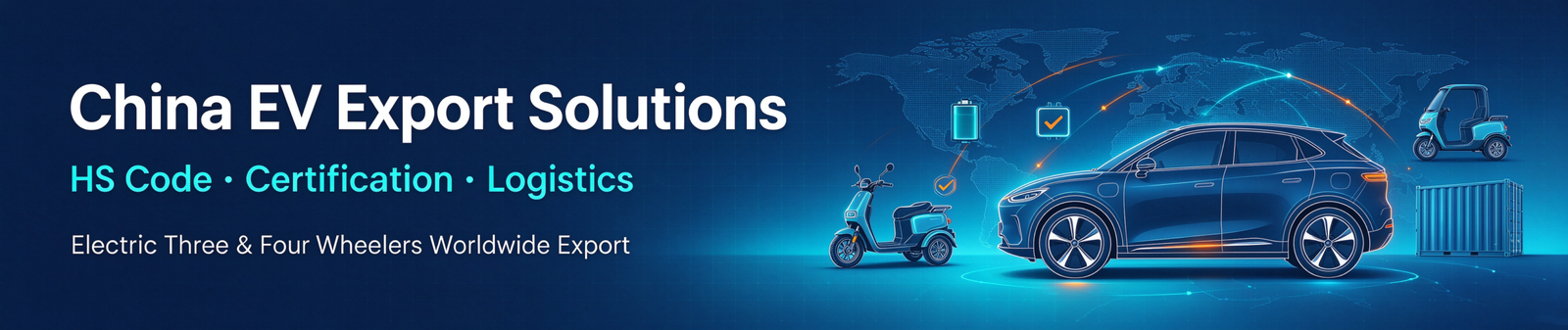
China EV Export Solutions: HS Code, Certification & Logistics
Global demand for electric commercial vehicles is climbing fast — from last-mile delivery in Latin America to municipal logistics in Europe and resort transport across the Middle East. But exporting an EV is not just loading a vehicle into a container. It means getting the HS code, certification, battery paperwork and container plan right before the crate leaves the factory.
As a China electric vehicle manufacturer, QIDI EV ships electric UTVs, golf carts, sightseeing carts, cargo tricycles and electric mini trucks under one document-first export workflow.
1. HS Code First: Don’t Classify by the Marketing Name
The first export decision is customs classification. The HS code sets the tariff rate, inspection rules, required certificates and even whether the vehicle can be registered locally.
The most common importer mistake is classifying by the brochure name — “golf cart”, “mini truck”, “electric ATV” — instead of the vehicle’s technical characteristics: passenger vs. cargo purpose, top speed, steering type, seating and road-use capability.
Customs looks at the spec sheet, not the sales label. A “golf cart” built for resort grounds and one fitted with lights, seatbelts and a 25 km/h rating can land in completely different tariff lines.
2. Five Vehicle Types, Five Classification Profiles
Electric UTV — TANK 10 / TANK 90
Use: farming, construction, off-road industrial haul. Classification clue: cargo/off-road working vehicle, not a passenger car.

Golf Cart
Use: resorts, campuses, gated communities. Classification clue: low-speed enclosed-site vehicle; a road-legal version needs extra lighting, seating and documentation.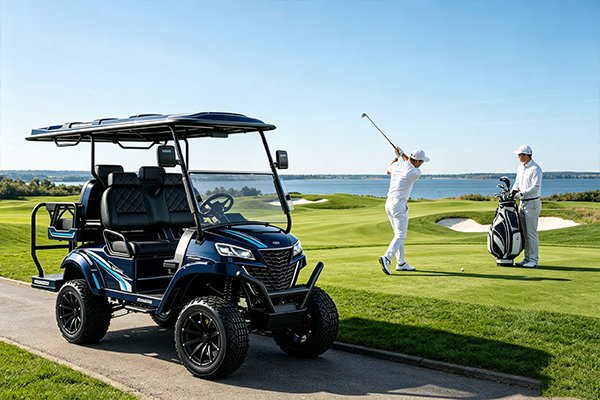
Sightseeing Cart
Use: tourist parks, hotels, heritage sites. Classification clue: multi-seat passenger, low speed, non-highway rated.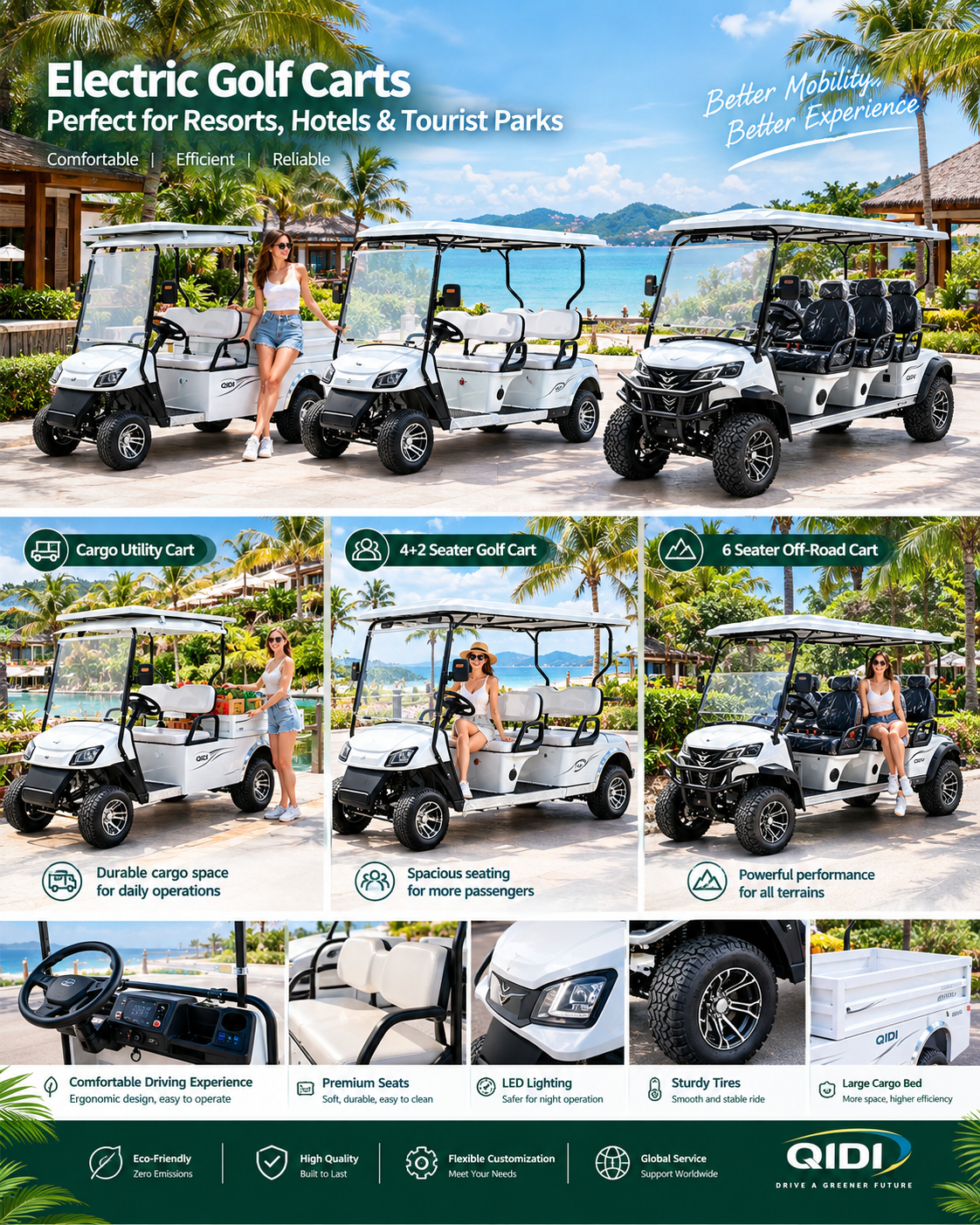
Cargo Tricycle — Aurora D1 / White Shark / Panda
Use: last-mile delivery, markets, retail distribution. Classification clue: three-wheel cargo, narrow-street operation, clearly non-passenger.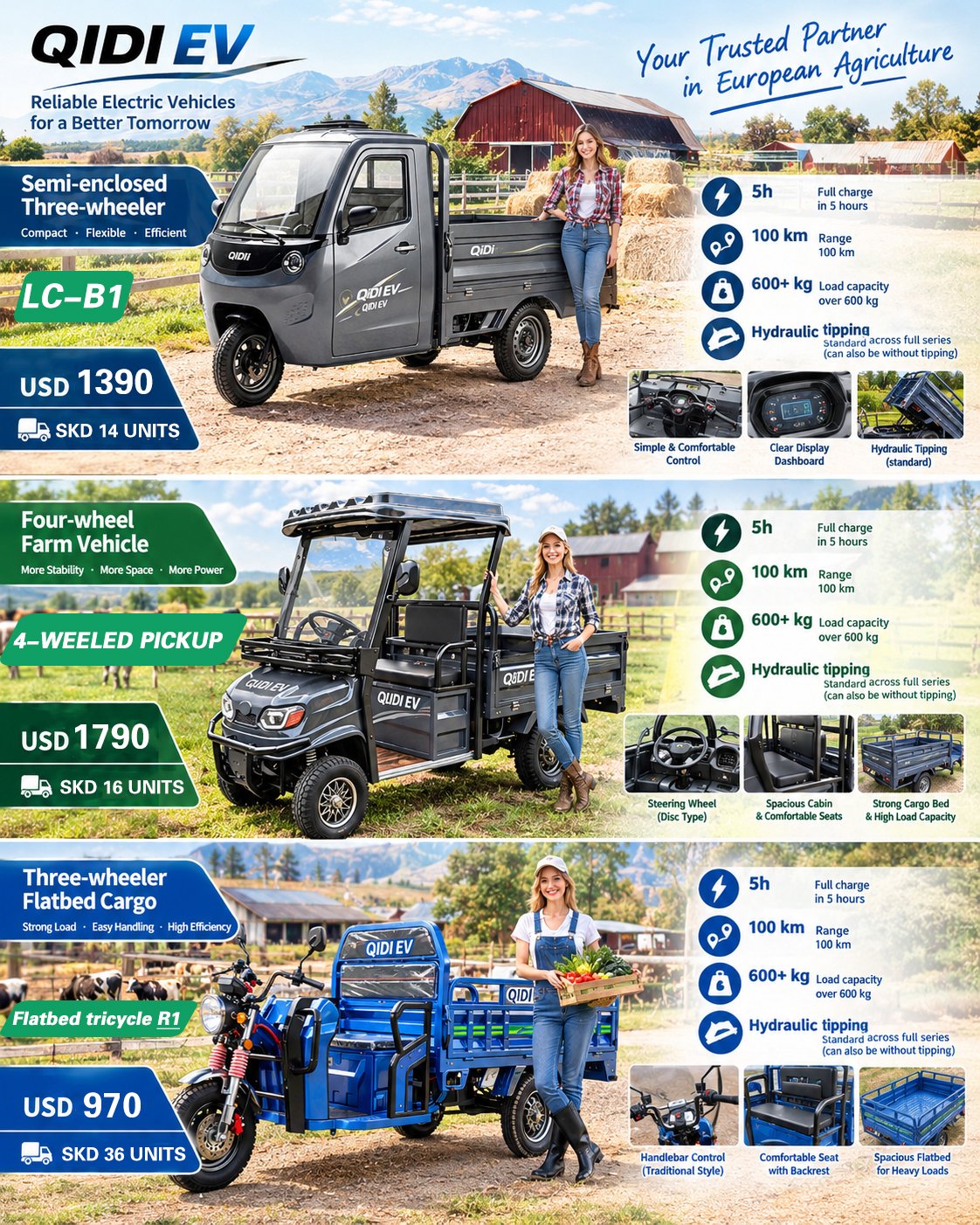
Electric Mini Truck / Pickup — NIO Mini / NIO A8H
Use: warehouse, municipal, light freight. Classification clue: L7e / N1 class where road-registered; payload and dimensions drive the code.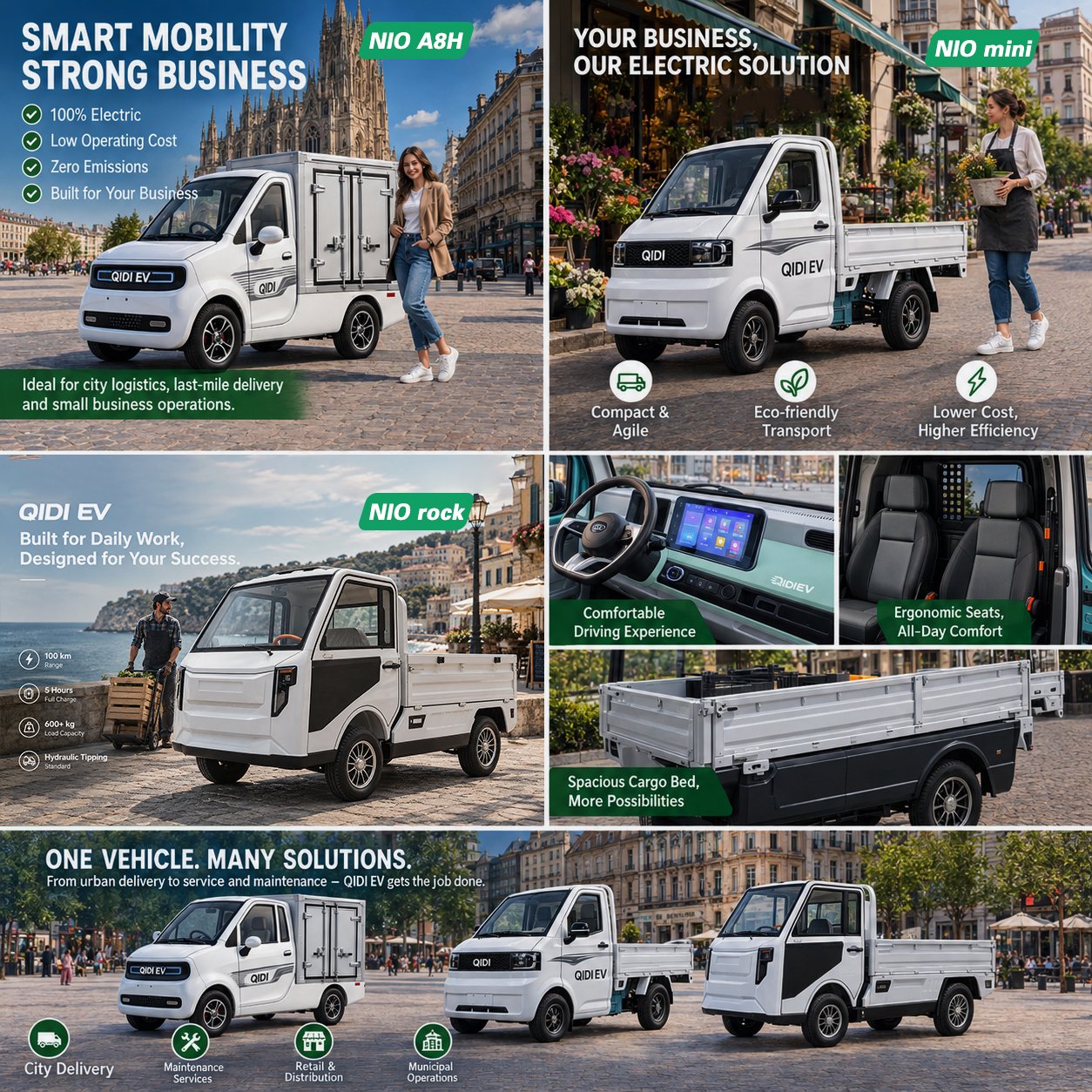
QIDI EV prepares the spec sheet, product description, photos and packing-list wording before shipment so the HS code matches the physical vehicle — not a hope-and-pray label.
3. Certification: ECE Approval Doesn’t Survive Major Changes
European buyers ask for “ECE certification” and then request a bigger battery the next week. The rule is simple: once a configuration is certified, structural changes need re-evaluation.
- Usually fine: color, branding, cosmetic trim
- Needs review: battery capacity, motor power, brakes, suspension, dimensions, top speed
That is why QIDI EV plans certification before production, not after a buyer changes their mind at the dock.
Battery Transport Docs (Non-Negotiable)
Every EV container also needs a UN38.3 test report, MSDS, battery spec sheet and transport declaration. Missing one document can hold an entire shipment at the port — far costlier than preparing it upfront.
4. CBU vs. SKD: Match the Method to the Market
- CBU (Complete Built Unit): ready-to-drive, fastest delivery, ideal for distributors testing demand.
- SKD (Semi Knock-Down): lower freight per unit, local assembly, better for partners with workshop capacity and volume commitments.
The right choice depends on local tax policy, import rules and the buyer’s business model — not on what is easiest for the factory to load.
5. Case Snapshot: A Brazilian Distributor’s Three Problems
- Customs uncertainty. Past shipments used vague descriptions, triggering inspections and storage fees. QIDI EV supplied spec sheets, correct HS suggestions and invoice-ready wording.
- Inefficient loading. Mixing UTVs, tricycles and mini trucks wasted container space. We designed a mixed-model loading plan with battery-safe packaging, cutting per-unit freight.
- No after-sales pipeline. We added spare-parts kits, remote technical support and training materials so the distributor could actually service what they sold.
Result: faster clearance, lower landed cost, and a parts pipeline that kept the fleet running past month seven.
Why Buyers Choose QIDI EV
Exporting electric vehicles is not a manufacturing problem — it is a documentation, compliance and logistics problem that starts on the spec sheet and ends at the customer’s warehouse.
QIDI EV covers the full chain for electric UTVs, golf carts, sightseeing carts, cargo tricycles and electric mini trucks: classification support, pre-production certification planning, battery compliance, CBU/SKD flexibility and standing spare-parts supply.
Planning a mixed-model shipment or need an HS-code and certification check before you quote?

Our vehicle models come with full ECE certification, so there is no need to worry about customs clearance, vehicle registration, or road legality. If you are interested, please click the message button and fill out the form to contact us.