
Is EEC Certification Recognized Worldwide? Global EV Certification Guide | QIDI EV
Is EEC Certification Recognized Worldwide? A Global Guide to Electric Vehicle Certification and Registration
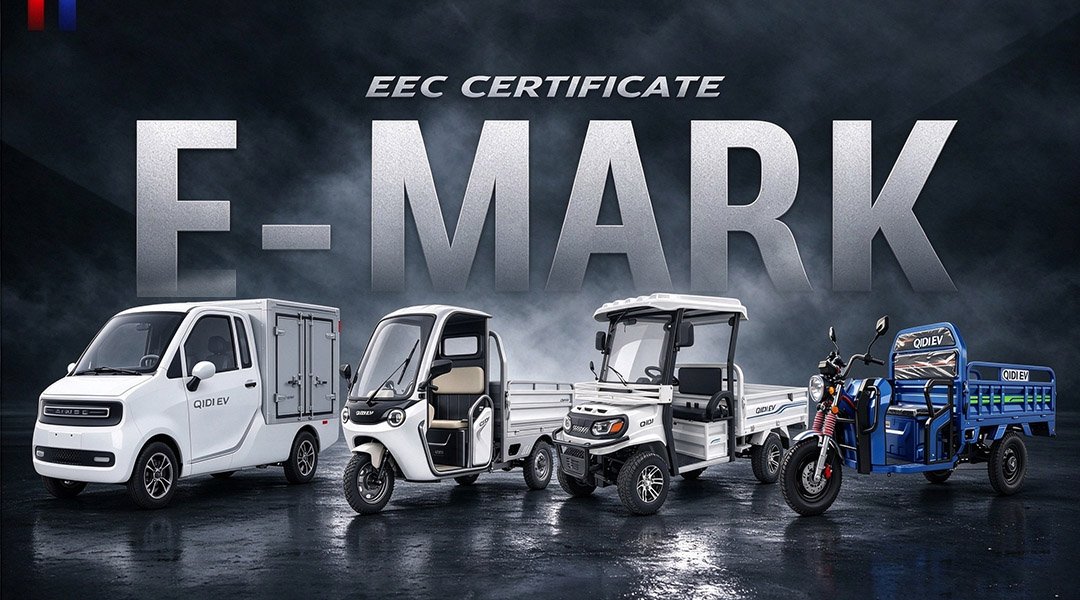
1. Is EEC Certification Recognized Worldwide?
For international electric vehicle distributors, one of the most important questions before purchasing from China is:
If an electric three-wheeler or four-wheeler has EEC certification, can it be imported, sold and registered directly in other countries?
The answer is: Not automatically.
EEC/EU vehicle type approval provides an important regulatory advantage, particularly within the European market. It can also provide valuable technical evidence when applying for approval in other countries.
However, different countries operate different vehicle certification and registration systems.
For example:
- Europe: EU vehicle type approval and applicable UNECE regulations.
- Thailand: TISI standards and Department of Land Transport requirements, depending on vehicle category.
- United States: DOT and FMVSS compliance.
- Nigeria: SONCAP and vehicle-specific conformity requirements.
- Brazil: SENATRAN homologation and CAT.
- Middle East: GSO and individual national requirements.
- Russia and Eurasian markets: EAC and TR CU 018/2011.
Therefore, an EEC certificate should be viewed as a strong international compliance foundation, not a universal vehicle registration permit.
2. Understanding EEC, EU Type Approval, UNECE and CoC
Before discussing individual markets, buyers should understand four important terms.
EEC / EU Whole Vehicle Type Approval
This refers to European vehicle approval under the applicable EU legislation. For electric two-, three- and four-wheel vehicles, the main framework is Regulation (EU) No 168/2013.
UNECE E-Mark
UNECE regulations establish internationally harmonized technical requirements for vehicles and components. Under the 1958 Agreement, mutual recognition applies between contracting parties that apply the same specific UN Regulations.
This does not mean every country automatically accepts every E-mark or every EU approval.
CoC (Certificate of Conformity)
A CoC is a manufacturer-issued document confirming that an individual vehicle conforms to an approved vehicle type. It is an important document for European registration.
National Vehicle Approval
Some countries require their own approval, conformity assessment, testing, registration or import authorization even when the vehicle already has European certification.
The important distinction is that international recognition of technical test results does not necessarily mean automatic recognition of an entire vehicle for local registration.
3. Global EEC Certification Recognition: Country-by-Country Comparison
Here is a practical overview for distributors considering QIDI EV electric three-wheelers and four-wheelers.
European Union
Main Certification System: EU Type Approval / CoC
Is EEC Sufficient? Generally yes, for the exact approved vehicle type
UNECE contracting markets
Main Certification System: Applicable UN Regulations
Is EEC Sufficient? Depends on regulations adopted by the country
Thailand
Main Certification System: TISI / DLT
Is EEC Sufficient? Additional local approval may be required
United States
Main Certification System: DOT / FMVSS / EPA where applicable
Is EEC Sufficient? No automatic acceptance
Nigeria
Main Certification System: SON / SONCAP / VehCAP
Is EEC Sufficient? Additional requirements may apply
Brazil
Main Certification System: SENATRAN / CAT
Is EEC Sufficient? Additional homologation generally required
Saudi Arabia
Main Certification System: SASO / national EV conformity
Is EEC Sufficient? Additional national certification required
GCC countries
Main Certification System: GSO conformity systems
Is EEC Sufficient? Depends on applicable GSO and national rules
Russia / EAEU
Main Certification System: EAC / TR CU 018/2011
Is EEC Sufficient? Separate EAEU approval generally required
Let’s look at the important markets in more detail.
4. European Union: EEC Certification Has Its Strongest Recognition
The EU is the primary market for vehicles approved under Regulation (EU) No 168/2013.
This regulation covers L-category vehicles, including:
- L1e: Two-wheel powered vehicles.
- L2e: Three-wheel mopeds.
- L3e: Two-wheel motorcycles.
- L4e: Motorcycles with sidecars.
- L5e: Three-wheel vehicles.
- L6e: Light quadricycles.
- L7e: Heavy quadricycles.
For a vehicle with valid EU whole-vehicle type approval and the appropriate CoC, the registration process is generally much more straightforward across EU Member States.
However, the exact vehicle configuration, production conformity and individual registration documents must still be checked.
QIDI EV’s EEC-certified product categories:
Our website features two dedicated product groups:
1. L6e / L7e Electric Vehicles:
QIDI EV EEC CoC L6e-L7e Electric Vehicles

2. L2e / L5e Electric Tricycles:
QIDI EV EEC CoC L2e-L5e Electric Tricycles
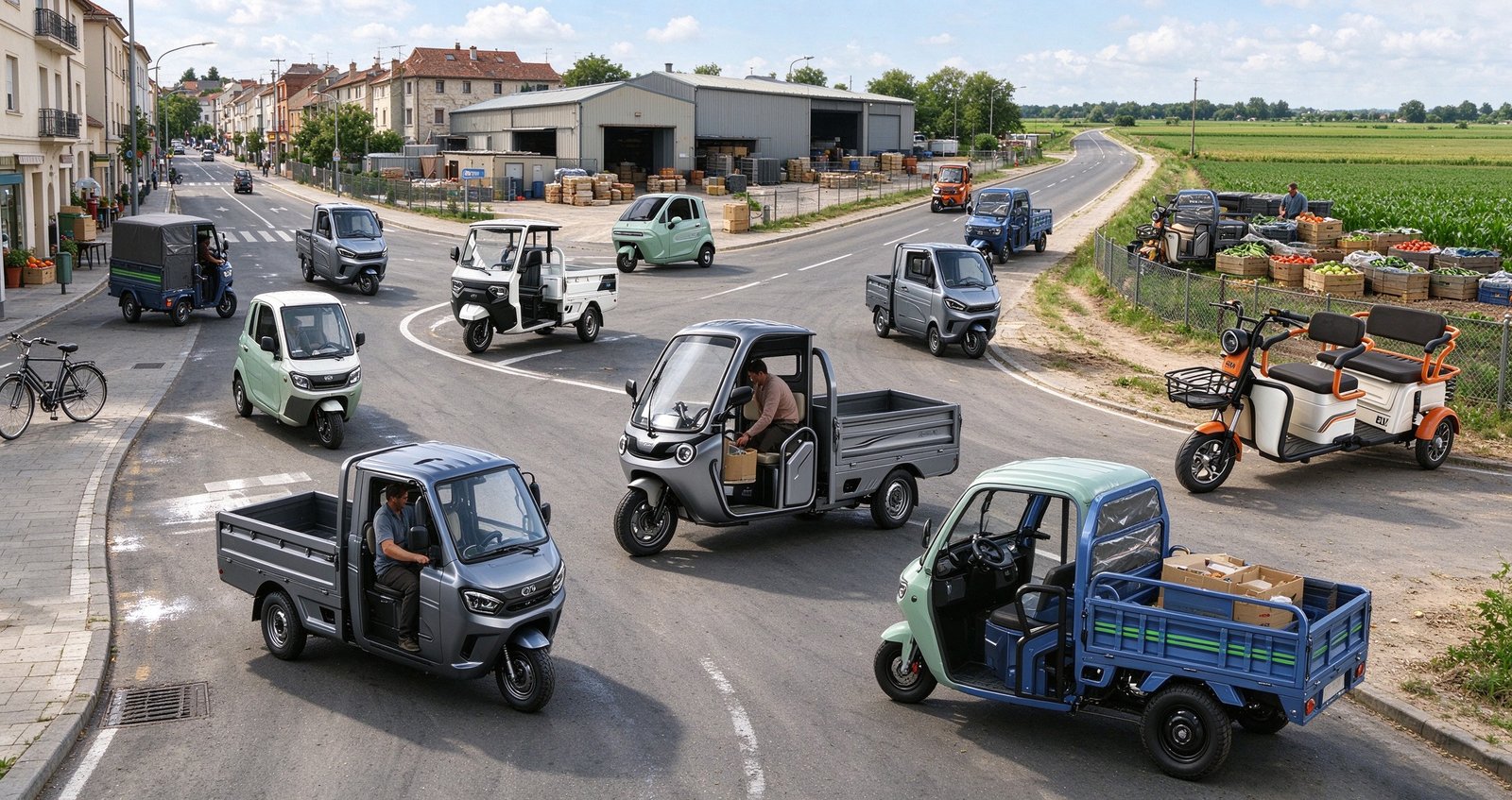
These product groups cover electric quadricycles and electric three-wheelers for different commercial and passenger applications.
5. Thailand: Does EEC Certification Replace TISI?
Thailand has its own vehicle approval and industrial standards system.
TISI (Thai Industrial Standards Institute) is responsible for applicable industrial product standards, while the Department of Land Transport (DLT) handles relevant vehicle approval and registration matters.
An existing EEC or UNECE approval may provide useful supporting technical documentation, but it does not automatically replace every applicable Thai requirement.
Depending on the vehicle category and applicable regulation, importers may need:
- Local vehicle approval.
- Applicable TISI certification.
- Technical inspection.
- Import documentation.
- DLT registration approval.
For electric vehicles, the exact requirements depend on vehicle classification and the applicable standards. TISI should not be assumed to apply identically to every electric three-wheeler and four-wheeler.
Recommendation: Confirm the vehicle category and approval pathway with the Thai importer and DLT before shipment.
6. United States: EEC Is Not a Substitute for DOT Certification
The United States operates a different vehicle compliance system.
NHTSA administers the Federal Motor Vehicle Safety Standards (FMVSS), while EPA requirements may also apply depending on the vehicle and its classification.
An EEC certificate does not automatically establish compliance with US FMVSS.
For road-going vehicles, the manufacturer generally needs to determine whether the vehicle complies with all applicable US requirements and whether the required manufacturer certification labeling is present.
Some vehicle classes and off-road vehicles may have different regulatory treatment.
Important: Do not assume that an EU-approved L6e or L7e vehicle can be directly registered as a road vehicle in the United States.
US importers should first establish the vehicle’s federal classification and applicable compliance pathway.
7. Nigeria: SONCAP and Vehicle Conformity Requirements
Nigeria operates a conformity assessment system through the Standards Organisation of Nigeria (SON).
The SONCAP program covers regulated imported products and involves product certification and shipment-related conformity procedures.
SON also operates a specific vehicle conformity assessment program known as VehCAP.
An EEC certificate may support the technical evaluation, but it does not automatically replace Nigerian requirements.
Importers should confirm:
- Whether the vehicle falls under applicable SON requirements.
- Whether SONCAP applies to the particular product.
- Whether VehCAP or other vehicle-specific procedures are required.
- Which documents must be provided before shipment and customs clearance.
Recommendation: Confirm the exact vehicle category and import procedure with SON or an authorized conformity assessment body before ordering.
8. Brazil: EEC Certification Does Not Automatically Replace CAT
Brazil has its own vehicle homologation and registration framework.
For vehicles intended for road use, the importer or manufacturer may need to obtain a Certificado de Adequação à Legislação de Trânsito (CAT) through the relevant SENATRAN procedures.
The CAT is associated with the approval of a vehicle’s make, model and version for the Brazilian vehicle registration system.
Therefore, European EEC approval alone does not automatically authorize a vehicle to be registered in Brazil.
Technical documents from the EEC approval package may be useful supporting materials, but additional Brazilian technical assessments and administrative procedures may be required.
Recommendation: Brazilian distributors should confirm the CAT process and technical requirements before importing a sample vehicle.
9. Middle East: GSO and National Certification Requirements
The Middle East is an important potential market for electric commercial vehicles.
However, certification requirements are not identical across all Gulf countries.
The Gulf Cooperation Council operates a regional conformity framework through the Gulf Standardization Organization (GSO).
For electric vehicles, relevant requirements can include:
- GSO technical regulations.
- Vehicle conformity documentation.
- Battery safety information.
- Electrical safety requirements.
- National import and registration procedures.
Saudi Arabia, for example, has a dedicated SASO service for electric vehicle model approval certificates.
The application may require a technical test report, battery MSDS, model approval documents, risk assessment and quality management information.
This means EEC documentation can help support the application, but it does not automatically replace the required SASO or other national approvals.
10. Russia and Central Asia: EAC Certification
Russia, Kazakhstan, Belarus, Armenia and Kyrgyzstan participate in the Eurasian Economic Union (EAEU).
Vehicle safety is regulated under TR CU 018/2011 – On the Safety of Wheeled Vehicles.
Depending on the vehicle and its intended use, the applicable EAEU approval documents may include a vehicle type approval or a vehicle safety construction certificate.
EEC certification and EAC certification are two different regulatory systems.
An EU CoC should not be treated as an EAC certificate.
However, existing European technical reports, component approvals and engineering documents may be useful when preparing an EAEU conformity assessment application.
For distributors targeting Russia and Central Asian markets, the correct approach is to establish the EAEU vehicle category and approval procedure before production.
11. Does an EEC-Certified Vehicle Need to Be Tested Again in Every Country?
Not necessarily.
There are three possible situations:
Situation A: Full or applicable mutual recognition
If the destination country recognizes the exact approval under an applicable international agreement or regulatory arrangement, repeated testing of the recognized requirements may not be necessary.
Situation B: Supplementary certification
The country recognizes certain existing technical reports or UNECE approvals but requires additional local documents, tests, labels or administrative approval.
Situation C: New national vehicle approval
The destination country operates a separate vehicle homologation system, and the importer must obtain the required national approval before road registration.
This is why QIDI EV recommends checking certification requirements before confirming an export order.
A small amount of preparation before shipment can prevent expensive problems after a vehicle arrives at the destination port.
12. How QIDI EV Supports International Vehicle Certification
QIDI EV offers electric three-wheelers and four-wheelers developed for different international markets.
Our EEC-related product portfolio includes:
L6e / L7e Electric Four-Wheel Vehicles
→ View QIDI EV L6e / L7e Models
L2e / L5e Electric Three-Wheel Vehicles
→View QIDI EV L2e / L5e Models
For international distributors, QIDI EV can support the preparation of relevant technical specifications, approval documentation, conformity information and export documents, subject to the actual approved model and commercial arrangement.
Our recommended cooperation process is:
- Select the vehicle model.
- Confirm the destination country.
- Identify the applicable vehicle category.
- Review the existing EEC and UNECE documentation.
- Check whether supplementary national certification is necessary.
- Confirm the production configuration.
- Arrange shipment and import documentation.
- Support the distributor with the applicable technical documents for local approval and registration.
One important point: a vehicle with existing type approval should not be freely modified. Changes to motor power, battery specifications, braking systems, dimensions or other approval-relevant characteristics may require additional assessment or approval amendments.
13. Final Advice: Choose a Manufacturer with International Certification Experience
When selecting an electric vehicle supplier, distributors should look beyond the statement “EEC Certified.”
Ask the manufacturer:
- Which exact models are covered by the approval?
- What are the approval numbers?
- Is the approval for a complete vehicle or individual components?
- Can the manufacturer provide the relevant CoC?
- Does the approved configuration match the vehicle being purchased?
- Can the technical documentation support applications in the destination market?
- What additional certification will be necessary?
The real value of EEC certification is not that it automatically opens every international market. Its value is that it establishes a recognized European compliance foundation and can reduce duplicated technical work where international recognition arrangements apply.
QIDI EV is committed to helping global distributors select the appropriate electric three-wheeler or four-wheeler, understand local certification requirements and build a more reliable international vehicle import business.
Before placing your next order, contact QIDI EV and let us help you evaluate the certification pathway for your target market.